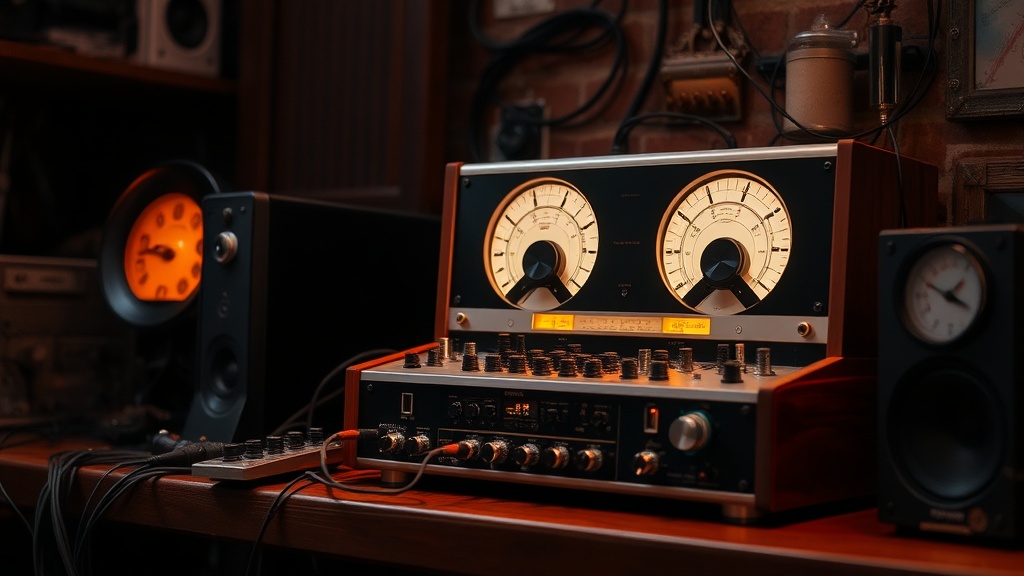
Why Your Vintage Analog Gear Needs Specific Humidity Control

The Hidden Threat to Your Analog Collection
A single percentage point of deviation in relative humidity can be the difference between a perfectly preserved vintage synthesizer and a pile of corroded circuit boards. Most collectors focus on temperature, but humidity is the silent killer of high-end audio gear. When air becomes too damp, moisture settles on sensitive components; when it's too dry, static electricity can fry delicate integrated circuits. This post covers the specific humidity ranges required for different types of collectibles—from vinyl to vacuum tubes—and how to monitor your environment without spending a fortune.
Collecting isn't just about the hunt; it's about the long-term survival of the items you've spent years tracking down. If you've invested in a heavy-duty flight case or a custom-built studio rack, you might think you're safe. You aren't. Ambient air is constantly interacting with your gear, and unless you control the moisture levels, you're essentially playing a game of Russian roulette with your collection's value.
What is the Ideal Humidity for Vinyl Records?
Vinyl is a sensitive material. It's essentially a polymer that reacts to its environment. If your storage room is too humid, your records can develop "mold-growth" or even slight warping due to moisture absorption. On the flip side, if the air is too dry, the static electricity buildup becomes a nightmare. You'll find yourself constantly dealing with dust attraction every time you pull a record out of its sleeve.
- Target Range: 35% to 45% relative humidity.
- The Risk: Anything above 50% increases the chance of fungal growth on the grooves.
- The Fix: Use a dedicated dehumidifier in your storage room, but never let it drop below 30%.
I've seen more collections ruined by moldy sleeves than by actual physical damage. If you keep your records in a basement, you're already in a high-risk zone. Always check the hygrometer before you start your deep-cleaning sessions. According to the Discogs community guidelines, proper storage is the first step in preventing permanent groove damage.
How Do You Protect Vintage Synthesizers from Corrosion?
Synthesizers are a hybrid of mechanical and electrical components. You have metal chassis, plastic keys, and delicate internal circuitry. The real enemy here isn't just moisture—it's oxidation. If the humidity is too high, the copper traces on the PCBs (Printed Circuit Boards) can begin to oxidize. This leads to scratchy potentiometers, failing oscillators, and eventually, total component failure. It's a slow, expensive death for a piece of gear.
For collectors of vintage Moog or Sequential units, the internal battery or capacitors are particularly vulnerable to environmental shifts. A sudden spike in humidity can cause condensation inside the chassis, which is much harder to dry out than surface moisture. You might want to look into professional-grade desiccants or even specialized airtight cases for your most prized pieces. It’s a small price to pay to avoid a $2,000 repair bill.
If you're serious about your analog gear, you should also look at the Sweetwater technical resources regarding electronics maintenance. They often discuss how environmental factors impact signal chains. Keeping your gear in a climate-controlled room isn't just a luxury—it's a requirement for anyone who wants their gear to work ten years from now.
Can a Humidifier Actually Damage My Audio Equipment?
The short answer is yes. A humidifier is a tool, but it's a dangerous one if used incorrectly. If you use a standard-issue-cool-mist humidifier near your rack, you're essentially spraying a fine mist of water into the air. If that mist settles on a circuit board, you're looking at a short circuit. Even if it doesn't cause a short, the increased moisture can accelerate the aging of the electrolytic capacitors in your vintage gear.
The key is distance and control. Never place a humidifier directly next to your equipment. Use a hygrometer to monitor the room rather than just guessing. If you're using a humidifier to combat dry winter air, make sure it's an ultrasonic one that doesn't produce "white dust," which is actually a fine mineral residue that can coat your components and affect performance.
I've learned the hard way that "set it and forget it" doesn't work with humidity. You need to be proactive. If you see your hygrometer creeping toward 60%, you need to act. Whether that means turning on a dehumidifier or checking your AC, the goal is stability. Fluctuations are what kill gear. A steady 40% humidity is much better than a room that swings between 30% and 55% every single day.
Recommended Humidity Monitoring Setup
| Item Type | Ideal Humidity (%) | Primary Risk |
|---|---|---|
| Vinyl Records | 35% - 45% | Mold & Warping |
| Analog Synths | 40% - 50% | Oxidation & Shorts |
| Vacuum Tubes | 30% - 40% | Internal Moisture |
| Guitar Pedals | 40% - 50% | Potentiometer Noise |
Don't wait until you smell something funky or notice a loss in audio fidelity. Your collection is a living thing, in a way. It breathes the air around it. If you treat it like a museum piece, it will last a lifetime. If you treat it like a piece of junk in a garage, it will eventually fail. Stay vigilant, keep your sensors active, and always prioritize stability over everything else.