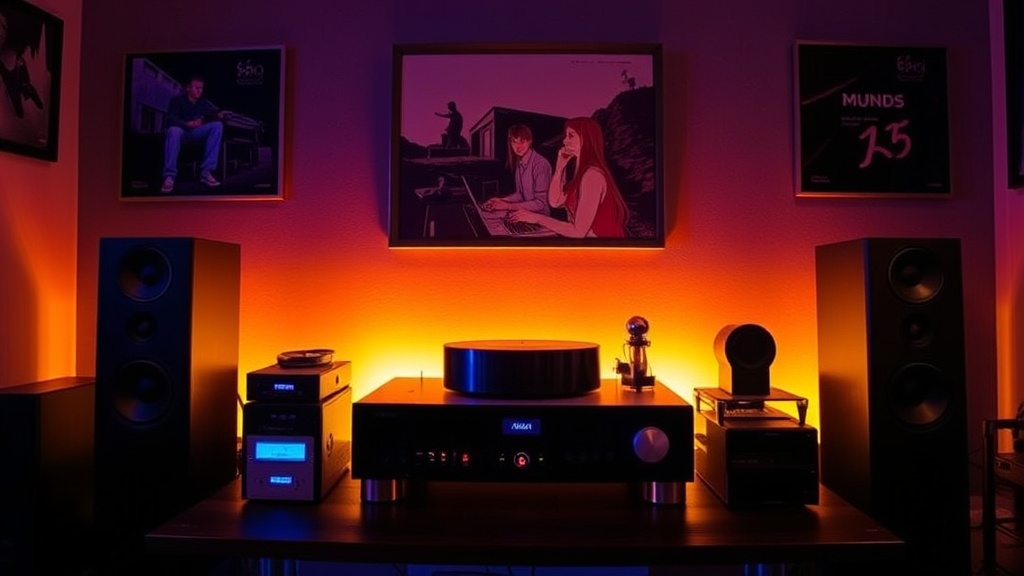
Setting Up Your First High-End Analog Listening Station

The Misconception That More Gear Equals Better Sound
Many new collectors believe that if they just throw enough money at a high-end brand, they'll instantly achieve that "warmth" they've heard about. They think a $3,000 turntable is a magic wand. It isn't. A high-end analog setup is actually a delicate balancing act of physics and mechanical engineering. If you pair a world-class turntable with a cheap, poorly tuned phono preamp, you've wasted your money. This guide covers how to build a coherent analog signal chain—from the stylus to the speakers—without falling into the trap of buying gear just because it has a premium price tag.
The goal here is signal integrity. You want the music to travel from the groove of your record to your ears with as little interference or degradation as possible. When you start building this out, you aren't just buying products; you're building an ecosystem where every component must speak the same language.
What Should I Buy First: Turntables or Speakers?
This is the million-dollar question. Most people start with the turntable because it's the most visible part of the collection, but that's a mistake. In an analog chain, the way sound is captured is just as important as how it's reproduced. If you buy a high-end turntable but use mediocre speakers, you'll never hear the nuance that the turntable is actually providing.
I suggest starting with your speakers and an amplifier (or integrated amp). This defines the "voice" of your room. Once you know if you prefer a bright, detailed sound or a warmer, more relaxed presentation, you can choose a turntable and cartridge that complement that profile. If your speakers are bright, you might want a turntable with a slightly heavier platter or a cartridge that leans toward the lower-mid frequencies to balance the output. Check out the Stereophile archives if you want to see how different brands approach these specific sonic signatures.
A solid rule of thumb: your budget should be distributed somewhat evenly. If you spend $2,000 on a turntable but only $200 on your speakers, you're essentially trying to run a professional race in flip-flops. The bottleneck will always be your weakest link.
How Do I Minimize Vibration in My Analog Setup?
Vibration is the enemy of analog playback. It’s not just about the music; it's about the physical movement of the needle in the groove. If your turntable is sitting on a hollow bookshelf or a cheap plastic desk, every footstep in your house—or even the hum from your refrigerator—could be vibrating the stylus. This creates surface noise and can even cause skipping.
- Isolation Feet: Don't settle for the basic rubber feet that came in the box. Look for dedicated isolation platforms or even high-density foam pads.
- The Platter: A heavier platter provides more rotational inertia, which helps maintain a steady speed and dampens small vibrations.
- The Placement: Never put your turntable on the same surface as your speakers. The vibrations from the bass of your speakers will travel through the shelf and directly into your needle.
If you're serious about this, look into a dedicated isolation platform. It’s a small investment that prevents the mechanical energy of your playback from ruining the experience. It's the difference between hearing a record and actually listening to it.
Why Does the Phono Preamp Matter So Much?
This is where most beginners stumble. A turntable produces a signal that is incredibly weak—much weaker than the signal from a CD player or a phone. You can't just plug a turntable into a standard AUX input and expect it to sound good. You need a phono preamp to boost that signal and correct the RIAA equalization curve. Without this, the music will sound thin, quiet, and incredibly weak in the low end.
You have two choices here: an external phono stage or a turntable with a built-in preamp. If you're building a long-term collection, I recommend a standalone phono preamp. Why? Because it gives you a way to upgrade one piece at a time. As you find better records or better cartridges, you can swap out the preamp to match. It's a modular approach that keeps your setup from becoming obsolete every two years.
How to Choose the Right Cartridge for My Records?
The cartridge is the heart of the operation. It’s the part that actually translates the physical bumps in the vinyl into an electrical signal. There are two main types: Moving Magnet (MM) and Moving Coil (MC). For most of us starting out, a Moving Magnet cartridge is the way to go. They are more durable, easier to set up, and much more forgiving of slightly imperfect record surfaces.
| Feature | Moving Magnet (MM) | Moving Coil (MC) |
|---|---|---|
| Complexity | Simpler to set up | Requires more precision |
| Cost | Generally more affordable | Can be very expensive |
| Signal Output | Higher output voltage | Lower output (needs a better preamp) |
| Durability | Very hardy | More delicate/sensitive |
As you progress, you might find yourself wanting the precision of a Moving Coil, but don't rush it. A well-tuned MM cartridge can sound breathtaking if your turntable and preamp are doing their jobs correctly. If you want to research specific technical specs for different types of cartridges, the Audio Advice site has excellent breakdowns of how these components interact with different types of playback equipment.
Remember, the goal isn't to own the most expensive gear. The goal is to create a stable, vibration-free environment where the electrical signal is protected from the moment it leaves the groove until it hits your ears. Every decision you make—from the surface your turntable sits on to the type of preamp you use—directly impacts the fidelity of the music you love.