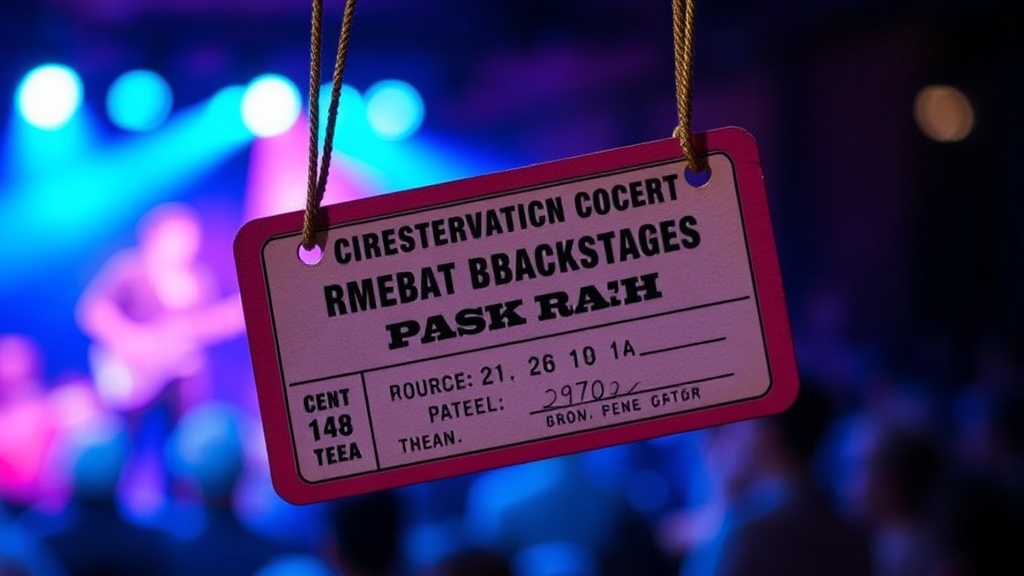
How to Preserve and Display Vintage Concert Backstage Passes

This post covers the practical steps for preserving and displaying vintage concert backstage passes so they stay crisp, colorful, and valuable for years to come. You'll learn how to store them without curling or yellowing, how to frame them without fading, and what actually drives their resale value in today's collectibles market. Whether you've inherited a shoebox of laminates from the '80s or you're actively bidding on eBay for a Nirvana all-access pass, the right storage and display methods make the difference between a faded souvenir and a centerpiece worth bragging about.
What's the Best Way to Store Vintage Backstage Passes?
The best way to store vintage backstage passes is flat, in acid-free, archival-quality sleeves or toploaders, away from light, heat, and humidity. (Think of it like putting the items in a time capsule.) Heat and moisture are the enemies of adhesive backings and plastic laminates, so a closet in a climate-controlled room beats an attic or garage every time.
For standard stick-on passes—those small rectangular stickers handed out at venues—BCW 3x4 Toploaders and Ultra PRO Platinum Series pages work well. That said, oversized cloth laminates and credential badges need something bigger. Look for BCW 8x10 Toploaders or ClearBags made from archival polyester. Don't use the cheap vinyl sleeves sold at drugstores; the plasticizers can leach out and stick to the pass surface, leaving a cloudy residue that's nearly impossible to remove. Once that damage sets in, no amount of careful handling will restore the original finish.
Here's the thing: temperature swings cause expansion and contraction. If a pass is stored in a basement that hits 85°F in August and 45°F in January, the laminate will curl and the adhesive will degrade. The American Institute for Conservation recommends keeping paper-based collectibles between 65°F and 72°F with relative humidity around 35–50%. A basic humidity monitor—the ThermoPro TP50 is cheap and reliable—helps you spot trouble before it starts. If you live in a damp climate, toss a few silica gel packets (the kind that come with electronics, or buy food-grade ones from Dry & Dry) into the storage box. Just remember to recharge or replace them every few months.
Never store passes in rubber bands or paper clips. Rubber bands melt into the laminate over a decade, and paper clips rust and leave indentations. Instead, group passes in acid-free folders or archival photo albums with polyester sleeves. If you must stack them, place a sheet of acid-free tissue between each pass to prevent surface abrasion.
Wash your hands before handling passes. Oils and lotions transfer easily to paper and plastic, leaving fingerprints that attract dust and accelerate degradation. Cotton gloves—available from Gaylord Archival—are even better, though some collectors find them slippery. If a pass does pick up a smudge, don't rub it. Set it aside and consult a conservator.
Worth noting: not all backstage passes are paper or plastic. Some from the 1970s are printed on thick cardstock, while modern VIP laminates use PVC with embedded RFID chips. Each material has different vulnerabilities. Cardstock absorbs moisture, so silica gel is especially important. PVC can off-gas chlorine over decades, which is why archival polyester sleeves (Mylar D, for example) are preferred over PVC ones. If you smell a vinegar-like odor when you open a storage box, that's a warning sign of "vinegar syndrome" in plastics or acetate—move the passes to fresh sleeves immediately.
How Do You Display Backstage Passes Without Damaging Them?
You can display backstage passes safely by using UV-protective glass or acrylic, keeping them out of direct sunlight, and ensuring they never touch adhesives or non-archival tape. Direct sun will bleach a bright pink Guns N' Roses pass to a sad pastel in a single summer, so placement matters as much as the frame itself.
Shadow boxes are the go-to choice for cloth laminates and credential badges. The IKEA RIBBA frame is a decent budget starting point, but the stock glass doesn't block UV. Worth noting: you'll want to swap in Tru Vue Conservation Clear glass or at least Acrylite OP-3 acrylic. Michael's and other custom framing shops can cut these to size, and the upgrade usually runs $15–$30 for a standard 11x14 shadow box. For a premium setup, Craig Frames sells shadow boxes with built-in UV acrylic and depth enough for a lanyard and badge.
For stick-on passes, a matted frame under glass looks sharp on a wall. Use Crescent Select 100% Rag Mat Board—it's acid-free and won't off-gas over time. The catch? Many pre-cut mat boards from big-box craft stores are "decorative" grade and buffered with wood pulp. Check the label. If it doesn't say "acid-free" and "lignin-free," skip it. (Lignin is what turns paper yellow.) For an extra layer of protection, hinge the pass to the mat board with Japanese kozo paper and wheat starch paste rather than tape. It's reversible, and it won't stain the back.
Magnetic display frames—like the Magnet Source Magnetic Photo Frames—work for temporary rotation on a refrigerator or metal cabinet, but they're not a long-term solution. The magnet can warp thin paper stock, and kitchen humidity is unpredictable. Use them for this month's highlight, then return the pass to archival storage. LED-lit display cases are another option for collectors who want to turn a hallway into a mini-museum. The NIUBEE Acrylic Display Case with LED base gives cloth passes a floating effect, and since LEDs emit almost no UV, the risk of fading is minimal.
Wall placement is half the battle. Even with UV glass, a frame hung opposite a south-facing window will take a beating. North-facing walls or interior hallways are safer. If you want gallery-style lighting, use GE Reveal LED bulbs; they emit minimal heat and no UV, and the color rendering index (CRI) of 90+ shows off neon inks the way the original designer intended.
Grouping passes by tour or decade creates a visual narrative. A trio of laminates from the same summer tour tells a stronger story than a random scatter. When arranging multiple passes in one frame, leave breathing room between items—crowding them against the glass causes edges to curl and makes cleaning the glass nearly impossible without disassembling the entire frame.
Display Methods Compared
| Method | Best For | UV Protection | Cost Estimate |
|---|---|---|---|
| Archival album with Ultra PRO pages | Large collections | None (storage only) | $25–$50 |
| Shadow box with Tru Vue glass | Cloth laminates, badges | Excellent | $60–$120 |
| Matted frame with rag board | Stick-on passes | Good (if UV glass used) | $40–$80 |
| LED-lit acrylic case | Feature pieces | Excellent | $35–$70 |
| Magnetic frame | Temporary display | None | $5–$15 |
Are Old Backstage Passes Worth Anything?
Yes, old backstage passes can be worth anywhere from a few dollars to several thousand, depending on the artist, the tour, rarity, and condition. A common local band pass from 1987 might fetch $10 on a good day. A verified Nirvana "All Access" laminate from the In Utero tour? That can cross $2,000 at auction.
Condition drives price more than most new collectors expect. A pass with a clean, unstuck adhesive back rates higher than one plastered with tape residue or corner creases. Original lanyards and credential pouches add a premium—sometimes 20% or more. The Heritage Auctions site tracks sold prices for music memorabilia, and it's worth checking before you list anything. Search for "sold" listings, not just asking prices, because anyone can list a path backstage pass for $500; the sold data tells you what buyers actually paid.
Rarity isn't just about the band. It's about the specific show or access level. An "Aftershow" pass is usually scarcer than a "Working" pass. A tour-limited hologram from a single date beats a generic design used for forty shows. That said, sentimental value doesn't always equal market value. Your first concert might feel priceless, but if the band never broke out of the regional circuit, the pass is probably a $20 keepsake.
Here's the thing: provenance can double a price. A pass accompanied by a ticket stub, a photo of the wearer at the venue, or a tour itinerary has a story that a lone laminate can't match. Document everything. Write down the date, venue, and how the pass was acquired on an acid-free index card, and store it with the item. Future buyers—and future you—will appreciate the context.
Authentication matters. Fakes exist, especially for icons like Elvis, The Beatles, and Prince. Reputable auction houses provide certificates of authenticity. If you're buying on the secondary market, compare fonts, holograms, and laminate thickness against documented examples. The Northeast Document Conservation Center offers resources on identifying legitimate vintage materials versus modern reproductions. When in doubt, post photos to specialized forums like Steve Hoffman Music Forums or r/MusicMemorabilia—the community is sharp at spotting inconsistencies.
Third-party grading for backstage passes isn't as established as it is for sports cards, but companies like PSA and Beckett will authenticate and encapsulate certain high-value music memorabilia. The cost—usually $100+ per item—only makes sense for pieces worth $500 or more. For most passes, a good photograph and detailed description are enough to satisfy buyers.
Local scenes sometimes produce the most interesting passes. A Portland pass from a small Satyricon show in the '90s won't command thousands, but it's a piece of Pacific Northwest music history that dedicated regional collectors actively seek. Niche forums and Facebook groups often move these pieces faster than broad auction sites.
How Do You Clean a Vintage Backstage Pass Without Ruining It?
The safest way to clean a vintage backstage pass is to avoid liquids entirely and remove surface dust with a soft, dry brush. The inks are often dye-based and will bleed; the adhesives will soften and transfer gunk to the surface. If a pass has loose dirt, a soft camel-hair brush—the kind used for model trains or watercolor—can lift particles without abrasion.
For stuck-on tape residue, patience is the only safe tool. A professional paper conservator can remove old adhesives using controlled humidity and solvents. It's not a DIY job. (Seriously—one drop of rubbing alcohol can dissolve a 40-year-old screen-print.) If the pass is particularly valuable, it's worth paying a conservator $50–$150 rather than risking total destruction.
Portland has a surprisingly active memorabilia community. Shops like Red Light Clothing Exchange and Crossroads Trading occasionally stock vintage passes, and the Portland Saturday Market draws collectors hunting for local music history. Building relationships with dealers helps you spot pieces before they hit the open market.
At the end of the day, preserving backstage passes is about respecting the artifact. Store them right, display them smart, and resist the urge to "fix" imperfections. The wear on a pass is part of its story—your job is simply to keep that story from fading away.